
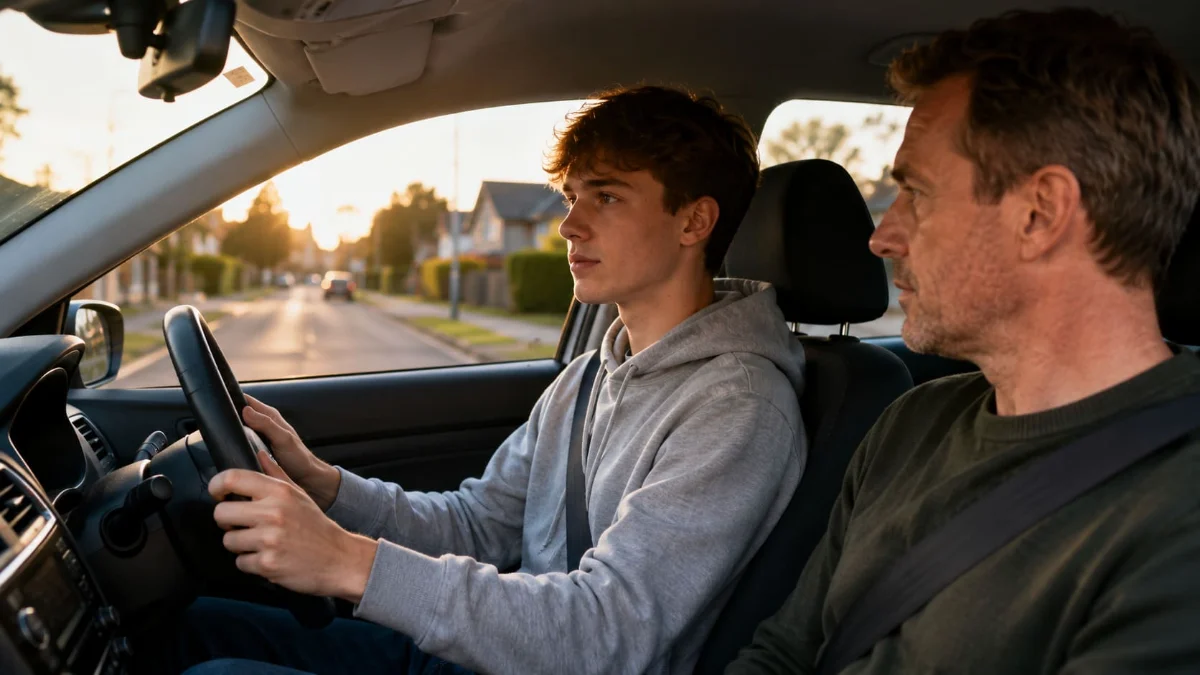
A driving licence for 17-year-olds has become even more relevant following the new rules that came into force on 1 July 2025. The rules allow 17-year-olds to obtain a licence for an ordinary car, while special restrictions remain in place until they turn 18.
The scheme has been set up to give young people more transport options for getting to school, work and leisure activities, particularly outside the larger cities. At the same time, the focus is on safety through gradual access to driving independently.
What are the rules for 17-year-olds with a driving licence?
The new rules for a driving licence for 17-year-olds came into force on 1 July 2025 via L165, which amended the Road Traffic Act. A 17-year-old may drive without an accompanying driver from 05:00 to 20:00. From 20:00 to 05:00, an accompanying driver must be in the car. The special restrictions apply until the young person turns 18.
17-year-olds can obtain a driving licence for an ordinary car
From the age of 16 years and 9 months, you can begin theory and practical lessons at an approved driving school
At 17, you can take the practical driving test on your birthday
You may drive without an accompanying driver from 05:00 to 20:00
From 20:00 to 05:00, an accompanying driver must be present
The restrictions apply until you turn 18
When can you start?
From the age of 16 years and 9 months, you can begin theory and practical lessons at an approved driving school. At 17, you can take the practical driving test on your birthday. This makes it possible to start the process in good time and be ready as early as the rules allow.
Basic requirements for a driving licence for 17-year-olds
To obtain a driving licence as a 17-year-old, these basic requirements apply:
You must have turned 17
You must have a valid address in Denmark
You must pass a medical certificate focusing on vision, reaction and mental fitness
Requirements for the accompanying driver
If a 17-year-old drives between 20:00 and 05:00, an accompanying driver must be in the car. The accompanying driver must meet all of the following requirements:
Be at least 30 years old
Hold a valid Danish/EU car driving licence for at least the past 10 years without interruption
Not have been disqualified from driving in the past 5 years
Be capable of taking control during the drive
Sit in the front passenger seat
Always carry their driving licence
What do the rules mean in practice?
In practice, the rules mean that a 17-year-old can use the car more independently during the daytime, for example to get to school, a part-time job or leisure activities. In the evening and at night, however, the requirement for an accompanying driver applies. It is precisely this gradual access that is a central part of the scheme.
Internal link options
FAQ about driving licences for 17-year-olds
What are the rules for 17-year-olds with a driving licence?
17-year-olds can obtain a driving licence for an ordinary car. They may drive without an accompanying driver from 05:00 to 20:00. From 20:00 to 05:00, an accompanying driver must be present, and these restrictions apply until they turn 18.
When can you start working towards a driving licence as a 17-year-old?
From the age of 16 years and 9 months, you can begin theory and practical lessons at an approved driving school.
When can you take the practical test?
At 17, you can take the practical driving test on your birthday.
What are the requirements for the accompanying driver?
The accompanying driver must be at least 30 years old, hold a valid Danish/EU car driving licence for at least the past 10 years without interruption, not have been disqualified from driving in the past 5 years, be capable of taking control during the drive, sit in the front passenger seat and always carry their driving licence.
Legal disclaimer: This article is based on publicly available information from the authorities as of March 2026. Rules may change, so always check the official sources for the current status: the Danish Road Traffic Agency (faerdselskort.dk), the Ministry of Transport (trm.dk), Borger.dk and the Danish Road Safety Council (sikkertrafik.dk). This article is not legal advice – contact an authorised driving school or authority for personal guidance.